


Benefits of Using RFID Technology
RFID assigns a unique ID to each item, enabling automated identification and tracking without manual input. This reduces data entry mistakes, prevents medication errors, and ensures critical items aren’t misplaced.
RFID enhances safety by accurately identifying and matching medications, surgical items, and lab samples to the correct patient, ensuring the right care is delivered at every step of the process.
RFID provides real-time tracking and a continuous digital trail for medical assets and specimens, ensuring the right item is used for the right patient, which is essential in labs and surgical settings.
From locating equipment instantly to automating inventory checks, RFID streamlines workflows, reduces search times, and improves staff productivity in high-demand environments like hospitals and diagnostic labs.
Each product can be serialized with a unique identifier (UID), allowing RFID systems to verify authenticity at every stage of the pharmaceutical supply chain. This helps prevent counterfeits and protects patients and brands from harmful or fake medications.
Real-time RFID tracking enables complete transparency of medical products, from manufacturing to point-of-care. It ensures regulatory compliance, proper inventory levels, and timely response to storage or delivery issues.
Why should you partner with SAG?

Trusted Across Healthcare Project
Design to Production Capability

R&D-Driven Quality for Excellence


For Hospital


Asset and Equipment Visibility
Surgical Instrument Sterilization Monitoring
Medication Dispensing Tracking

25 x 75 UHF Metal Label
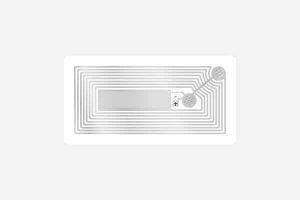
18 x 35 HF Metal Label
Pharmaceutical Industry


Supply Chain Transparency and Compliance
Protection Against Counterfeit Products
Real-Time Cold Chain Monitoring
For Laboratories/ Clinic Tests


Specimen Tracking
Consumable Authentication
Precision Setup for Lab Instruments
Frequently Asked Question (FAQ)
RFID can help healthcare organizations identify medication packages, specimens, medical devices, and equipment at selected points in a workflow. A compatible reader captures each tag’s identifier, while a connected system links it to information such as inventory status or process records. What an organization can track depends on where items are read and how those reads are integrated into its workflow.
Yes, but a standard RFID label may not perform reliably on every vial. Small size limits the space available for the label, curvature can make it harder to keep attached, and the liquid can affect readability. A label designed for these conditions should be tested on the actual vial and at the intended reading points.
SAG can evaluate a suitable label based on your vial dimensions, labeling process, and reading requirements.
The reader must first support the tag’s technology. The setup should then match where and how the item needs to be identified. For example, a fixed RAIN UHF reader may suit a defined receiving point; a handheld reader may suit targeted inventory checks; and a reader integrated into a cart or cabinet may support checks within that workflow. For close-range, item-by-item interaction, an HF/NFC tag may be read with a compatible reader or NFC-enabled phone.
SAG can help evaluate tag performance in the intended reading setup. Reader placement, software integration, and workflow design should be planned with the system integrator.
Yes, if the label is designed for the container and its storage conditions. For refrigerated, frozen, or ultra-low-temperature healthcare items, check the storage temperature, the container material, and whether the label is applied before or after the item is chilled. Repeated removal from storage may also affect adhesion. SAG can evaluate label fit and readability on the actual container under the intended conditions.
Some RFID tags can be designed for specific sterilization processes, but suitability depends on the tag and the process used. Steam, ethylene oxide (EtO), and gamma irradiation affect tag materials and components differently. The process conditions and number of cycles also matter.
To evaluate a candidate tag, share the sterilization method, process parameters, expected number of cycles, and when the tag needs to be read. Readability and physical condition should be checked on the finished item after the intended process.
Embedding may be useful when there is too little suitable space for an external label, or when an exposed label could interfere with handling, cleaning, or the device’s design. An embedded tag can provide an identifier for applications such as device tracking or pairing a device with the correct accessory.
The tag should be considered early in the device design. Available space, surrounding materials, assembly steps, and any sterilization process can affect tag selection. Read performance should be confirmed in the finished device.
Yes, but temperature monitoring requires a solution designed to measure or record temperature. A standard RFID identification label identifies an item; it does not automatically show whether the item experienced a temperature excursion. If you need a temperature history or an alert when a specified range is exceeded, define those requirements separately from item identification.
Frequently Asked Question (FAQ)
RFID can help healthcare organizations identify medication packages, specimens, medical devices, and equipment at selected points in a workflow. A compatible reader captures each tag’s identifier, while a connected system links it to information such as inventory status or process records. What an organization can track depends on where items are read and how those reads are integrated into its workflow.
Yes, but a standard RFID label may not perform reliably on every vial. Small size limits the space available for the label, curvature can make it harder to keep attached, and the liquid can affect readability. A label designed for these conditions should be tested on the actual vial and at the intended reading points.
SAG can evaluate a suitable label based on your vial dimensions, labeling process, and reading requirements.
The reader must first support the tag’s technology. The setup should then match where and how the item needs to be identified. For example, a fixed RAIN UHF reader may suit a defined receiving point; a handheld reader may suit targeted inventory checks; and a reader integrated into a cart or cabinet may support checks within that workflow. For close-range, item-by-item interaction, an HF/NFC tag may be read with a compatible reader or NFC-enabled phone.
SAG can help evaluate tag performance in the intended reading setup. Reader placement, software integration, and workflow design should be planned with the system integrator.
Yes, if the label is designed for the container and its storage conditions. For refrigerated, frozen, or ultra-low-temperature healthcare items, check the storage temperature, the container material, and whether the label is applied before or after the item is chilled. Repeated removal from storage may also affect adhesion. SAG can evaluate label fit and readability on the actual container under the intended conditions.
Some RFID tags can be designed for specific sterilization processes, but suitability depends on the tag and the process used. Steam, ethylene oxide (EtO), and gamma irradiation affect tag materials and components differently. The process conditions and number of cycles also matter.
To evaluate a candidate tag, share the sterilization method, process parameters, expected number of cycles, and when the tag needs to be read. Readability and physical condition should be checked on the finished item after the intended process.
Embedding may be useful when there is too little suitable space for an external label, or when an exposed label could interfere with handling, cleaning, or the device’s design. An embedded tag can provide an identifier for applications such as device tracking or pairing a device with the correct accessory.
The tag should be considered early in the device design. Available space, surrounding materials, assembly steps, and any sterilization process can affect tag selection. Read performance should be confirmed in the finished device.
Yes, but temperature monitoring requires a solution designed to measure or record temperature. A standard RFID identification label identifies an item; it does not automatically show whether the item experienced a temperature excursion. If you need a temperature history or an alert when a specified range is exceeded, define those requirements separately from item identification.
Discuss your healthcare RFID application with SAG
Related Products
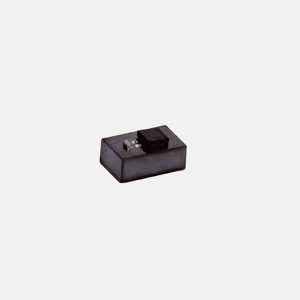
NFC Ferrite Tag 0503
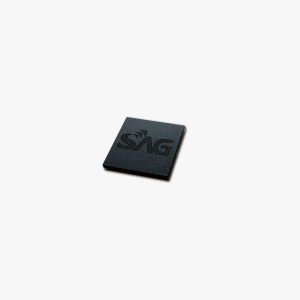
Molding Tag
Related Topics

Compact and Embeddable Molding Tag Transforms Smart Manufacturing and Healthcare
RFID and NFC: Catalysts for Digital Product Passport Implementation
RFID Makes Healthcare Smart
In a Laboratory
Material Science
100% Premium (Perfect) Roll