
Choose Insights
Choose Year
What is RFID?
RFID (Radio Frequency Identification) is a wireless technology that uses radio waves to automatically identify and track objects. An RFID system includes RFID tags, readers, and software, with tags serving as the essential data carriers.
In today’s connected world, RFID system is already powering solutions in logistics (real-time shipment tracking), retail (automated inventory management), healthcare (equipment and patient identification), manufacturing (production line monitoring), and transportation (automated toll collection, also known as ETC). Its ability to deliver accurate, automated, and contactless data capture makes it a core enabler of a smarter future.
Among these, RFID tags play a critical role—they store and transmit the unique data that powers identification, authentication, and tracking in various industries. This article focuses on helping you understand what RFID tags are, how they work, and why they are essential to modern operations.
In today’s connected world, RFID system is already powering solutions in logistics (real-time shipment tracking), retail (automated inventory management), healthcare (equipment and patient identification), manufacturing (production line monitoring), and transportation (automated toll collection, also known as ETC). Its ability to deliver accurate, automated, and contactless data capture makes it a core enabler of a smarter future.
Among these, RFID tags play a critical role—they store and transmit the unique data that powers identification, authentication, and tracking in various industries. This article focuses on helping you understand what RFID tags are, how they work, and why they are essential to modern operations.
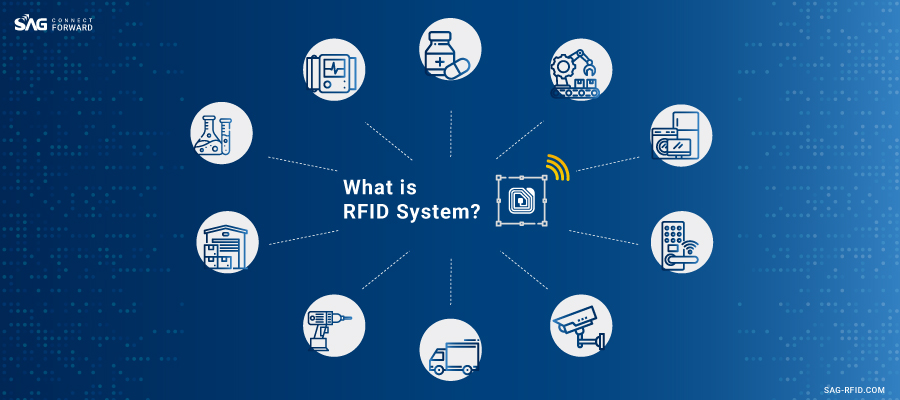
1. What is RFID System?
RFID (Radio Frequency Identification) system is a wireless solution used to automatically identify, track, and manage objects. It consists of four key components: RFID tags, readers, antennas, and a back-end system. These components work together to capture and process information quickly and accurately, without the need for direct line-of-sight scanning.
RFID system is widely used across industries and applications such as inventory management, asset tracking, secure access, and customer engagement. Many also include encryption and authentication features to protect critical data, ensuring reliability and security in diverse environments. In this beginner-friendly article, we’ll walk through the RFID ecosystem step by step to give you a clear understanding of how it all works.
RFID system is widely used across industries and applications such as inventory management, asset tracking, secure access, and customer engagement. Many also include encryption and authentication features to protect critical data, ensuring reliability and security in diverse environments. In this beginner-friendly article, we’ll walk through the RFID ecosystem step by step to give you a clear understanding of how it all works.
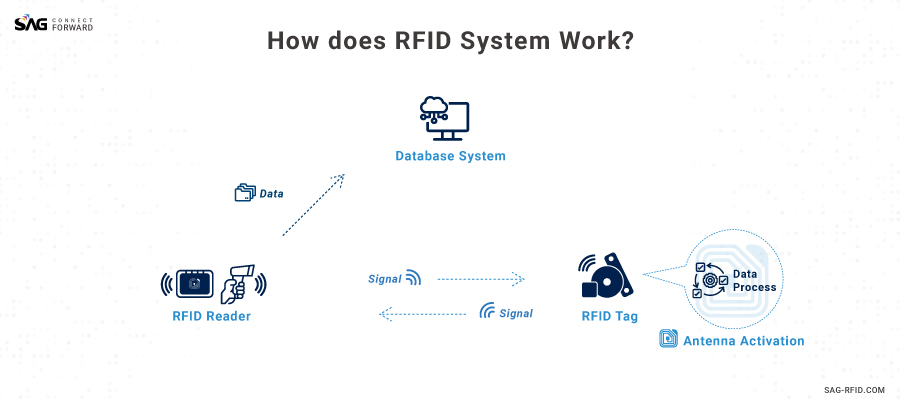
2. How does RFID System Work?
RFID doesn’t work alone — RFID tag is one of vital roles to bring RFID system into operation. To understand how RFID system works, it helps to first look at the main components of an RFID system:
>> Antenna: Transmits signals into the environment and receives processed signals (modulated signals) back from RFID tag to enable wireless communication.
RFID Tag (Transponder): A small compone nt with a microchip and an antenna that retains and transmits data.
>> Antenna: Antenna in RFID tag is used to capture the signals from RFID reader to activate the tag’s microchip for data transmission. Finally, RFID tag antenna transmits back the signals to RFID reader.
Cloud Platform/ Back-End System: Stores and analyzes data to provide insights for actionable items.
Together, these components enable wireless identification and tracking through a simple three-step process:
RFID reader emits signals through its antenna to detect nearby tags. For passive tags, they rely on these signals for necessary power, while battery-assisted tags have their own power to activate the tag and trigger a response.
Tag Activation & Response
Once an RFID tag’s antenna receives signals from RFID reader, it powers the microchip, processes the request, and sends back the signals to RFID reader, such as a unique identifier (UID) or encoded information.
Data Capture & Processing
The RFID reader receives the processed signals from RFID tags and transfers it to a cloud platform or back-end system. This data can then be used for inventory management, asset tracking, authentication and more. This streamlined process allows fast, automated, and reliable identification without the need for direct line-of-sight scanning.
- RFID Reader (Interrogator):
>> Antenna: Transmits signals into the environment and receives processed signals (modulated signals) back from RFID tag to enable wireless communication.
>> Antenna: Antenna in RFID tag is used to capture the signals from RFID reader to activate the tag’s microchip for data transmission. Finally, RFID tag antenna transmits back the signals to RFID reader.
Together, these components enable wireless identification and tracking through a simple three-step process:
- Signal Transmission
RFID reader emits signals through its antenna to detect nearby tags. For passive tags, they rely on these signals for necessary power, while battery-assisted tags have their own power to activate the tag and trigger a response.
Once an RFID tag’s antenna receives signals from RFID reader, it powers the microchip, processes the request, and sends back the signals to RFID reader, such as a unique identifier (UID) or encoded information.
The RFID reader receives the processed signals from RFID tags and transfers it to a cloud platform or back-end system. This data can then be used for inventory management, asset tracking, authentication and more. This streamlined process allows fast, automated, and reliable identification without the need for direct line-of-sight scanning.
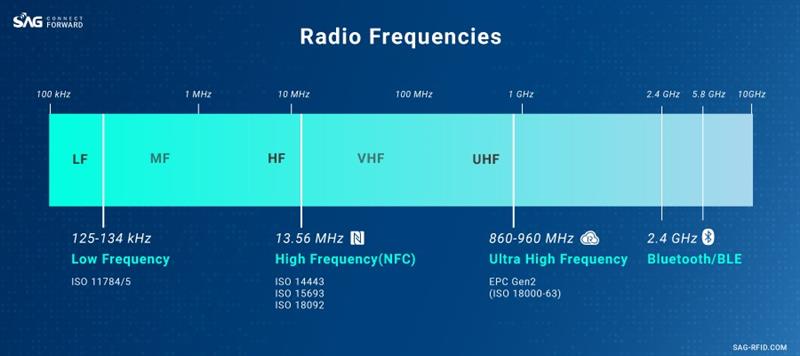
3. Radio Frequencies
RFID operates across three main frequency bands — Low Frequency (LF), High Frequency (HF, including NFC), and Ultra-High Frequency (UHF / RAIN RFID). Each offers different advantages in read range, data speed, and environmental performance, so choosing the right one depends on your application.
Low Frequency (LF):
Low Frequency (LF) RFID offers short-range, highly reliable reads, even in harsh conditions. It’s widely used in agriculture and industrial settings where durability matters more than speed.
High frequency (HF) RFID operates at 13.56 MHz, making it the most versatile choice for a wide range of applications. The primary advantages of HF RFID are its extended read range, higher security, and multi-tag reading capability. These features make it exceptionally efficient for managing inventories and assets.
Near-Field Communication (NFC) is a subset of HF RFID that uses the same 13.56 MHz operating frequency. The key advantage of NFC is its two-way communication protocol under the NDEF framework (NFC data exchange format).This allows devices not only to read data from a tag but also to exchange data securely. The widespread integration into smartphones has driven mass adoption.
UHF RFID, also known as RAIN RFID, supports long-range, high-speed, bulk scanning without line-of-sight—making it a go-to technology for retail, logistics, and large-scale asset management.
Low Frequency (LF):
Low Frequency (LF) RFID offers short-range, highly reliable reads, even in harsh conditions. It’s widely used in agriculture and industrial settings where durability matters more than speed.
- Frequency: 125–134 kHz
- Read range: Up to 70 cm
- Protocol: ISO 11784, ISO 11785
- Applications: Livestock Management, Access control, Industrial tracking
High frequency (HF) RFID operates at 13.56 MHz, making it the most versatile choice for a wide range of applications. The primary advantages of HF RFID are its extended read range, higher security, and multi-tag reading capability. These features make it exceptionally efficient for managing inventories and assets.
- Frequency: 13.56 MHz
- Read range: 10cm to 30cm
- Protocol followed: ISO 14443 (contactless proximity), ISO 15693(contactless vicinity)
- Target Applications: Access control, library systems, event management, mass transportation
Near-Field Communication (NFC) is a subset of HF RFID that uses the same 13.56 MHz operating frequency. The key advantage of NFC is its two-way communication protocol under the NDEF framework (NFC data exchange format).This allows devices not only to read data from a tag but also to exchange data securely. The widespread integration into smartphones has driven mass adoption.
- Frequency: 13.56 MHz
- Read range: limited read range of up to 10cm
- Protocol followed: ISO 14443 (NFC forum Type 2 and 4), ISO 15693(Type 5), and ISO 18092 (Type 3)
- Target Applications: Product authentication, branding, contactless payment and device pairing
UHF RFID, also known as RAIN RFID, supports long-range, high-speed, bulk scanning without line-of-sight—making it a go-to technology for retail, logistics, and large-scale asset management.
- Frequency: 860–960 MHz
- Read range: Up to 12 m or more
- Protocol: EPC Gen2 (ISO 18000-63)
- Applications: Asset tracking, warehouse automation, supply chain management
| Frequency Band | Frequency | Read Range | Standards & Protocol | Applications |
|---|---|---|---|---|
| Low Frequency (LF) | 125-134 kHz | Up to 70 cm | ISO 11784 ,ISO 11785 | Livestock management, access control, industrial tracking |
| High Frequency (HF) | 13.56 MHz | 10 cm to 30cm | ISO 14443 A/B, ISO 15693 | Access control, library systems, event management, mass transportation |
| Near Field Communication (NFC) | 13.56 MHz | Up to 10 cm | ISO 14443A (*2 / 4) ISO 15693 (*5) ISO 18092 (*3) *NFC Forum Tag Types | Product authentication, branding, contactless payment and device pairing |
| Ultra-High Frequency (UHF) | 860-960 MHz | Up to 12 m or more | EPC Gen2 (ISO 18000-63) | Asset tracking, warehouse automation, supply chain management |
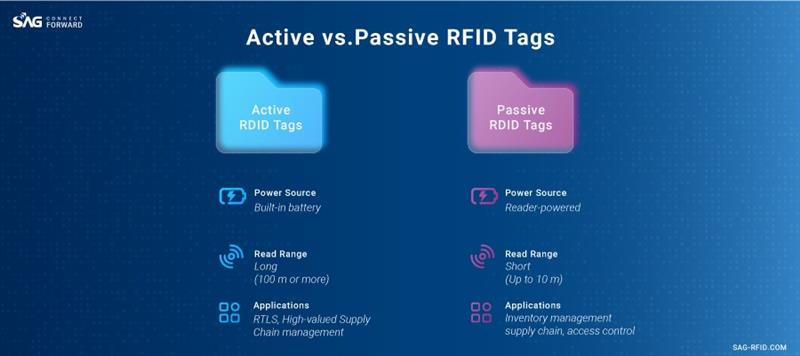
4. Active vs. Passive RFID Tags
RFID tags generally fall into three categories: active, passive and battery-assisted passive (BAP). The key distinction is whether they have an internal power source and how they communicate with RFID readers.
Passive RFID Tags:
Passive tags have no internal power source. Instead, they rely on the energy from the RFID reader’s signal to activate and transmit data. UHF RFID systems use backscatter coupling to transmit signals, which differs from the inductive coupling used by low-frequency (LF) and high-frequency (HF) RFID systems. Without the need for a battery, such a design makes RFID transponders smaller, lighter, and maintenance-free with lifespans that can last for decades. Their cost-effectiveness makes them ideal for large-scale deployments such as inventory management and access control.
- Active RFID Tags:
5. Key Benefits of RFID System
RFID system delivers more than basic identification. Each RFID tag contains a globally unique identifier (UID) that connects physical objects to IoT systems, enhancing security, verifying authenticity, and preventing counterfeiting. By enabling automatic data capture and bulk scanning, RFID streamlines system integration, improve operational accuracy, and support traceability and sustainability.
Let’s take a closer look at the top benefits of RFID system, from enhancing efficiency and accuracy to improving security, traceability, and customer engagement.
RFID automates routine tasks such as inventory counts, asset tracking, and maintenance scheduling, reducing labor costs and minimizing errors.
>>In highly automated factories, RFID is used to track tools and machinery for quick asset location and scheduled maintenance. On the other hands, logistics centers use RFID to sort packages with minimal manual handling to save both time and costs.
Accuracy & Reliability
RFID minimizes errors from manual data entry. Each tag’s unique identifier ensures precise tracking, while IoT integration enables real-time monitoring of products status.
>>Hospitals, for example, use RFID-enabled smart cabinets to track medications, monitor expiration dates, and prevent errors, improving both patient safety and operational reliability.
Traceability, Visibility & Sustainability
RFID provides real-time visibility across the entire supply chains, enabling informed decision-making and optimizing inventory levels. By tracking a product’s journey from raw material to retail, companies gain the end-to-end transparency required to meet regulatory requirements, such as the Digital Product Passport (DPP).
>>Apparel retailers tag UHF RFID on every item, allowing them to track textiles from the warehouse to the sales floor. This item-level traceability not only prevents stockouts and improves restocking efficiency, but also allows brands to verify supply chain transparency, reduce overproduction, and facilitate circularity by tracking the item’s lifecycle for future reuse or recycling.
Security & Authenticity
RFID enhances supply chain security by enabling item-level identification and authentication. Secure RFID tags support unique identification and controlled access, helping reduce the risk of counterfeiting, diversion, and unauthorized handling.
>>Pharmaceutical brands apply RFID at the unit or carton level and link each identifier to serialization and traceability records. As products move through packaging, CDMOs, wholesaler, distribution, and hospital, item-level tracking data is captured at key process points and stored in secure, audit-ready traceability systems, supporting product authentication, recall management, and regulatory compliance.
Customer Engagement
An RFID system also creates a direct connection between the brand and the consumer. By utilizing NFC, physical products are transformed into an interactive digital interface. This allows brands to offer transparency and high-value services long after the item has left the store.
>>Knitwear brands embed NFC tags in garments, allowing customers to access product’s entire lifecycle on their smartphones. From the origin of the wool to care instructions and authenticity verification, this direct interaction enables consumers to verify product history, fostering deeper brand loyalty and transparency at the point of purchase.
Let’s take a closer look at the top benefits of RFID system, from enhancing efficiency and accuracy to improving security, traceability, and customer engagement.
- Efficiency & Cost Reduction
RFID automates routine tasks such as inventory counts, asset tracking, and maintenance scheduling, reducing labor costs and minimizing errors.
>>In highly automated factories, RFID is used to track tools and machinery for quick asset location and scheduled maintenance. On the other hands, logistics centers use RFID to sort packages with minimal manual handling to save both time and costs.
RFID minimizes errors from manual data entry. Each tag’s unique identifier ensures precise tracking, while IoT integration enables real-time monitoring of products status.
>>Hospitals, for example, use RFID-enabled smart cabinets to track medications, monitor expiration dates, and prevent errors, improving both patient safety and operational reliability.
RFID provides real-time visibility across the entire supply chains, enabling informed decision-making and optimizing inventory levels. By tracking a product’s journey from raw material to retail, companies gain the end-to-end transparency required to meet regulatory requirements, such as the Digital Product Passport (DPP).
>>Apparel retailers tag UHF RFID on every item, allowing them to track textiles from the warehouse to the sales floor. This item-level traceability not only prevents stockouts and improves restocking efficiency, but also allows brands to verify supply chain transparency, reduce overproduction, and facilitate circularity by tracking the item’s lifecycle for future reuse or recycling.
RFID enhances supply chain security by enabling item-level identification and authentication. Secure RFID tags support unique identification and controlled access, helping reduce the risk of counterfeiting, diversion, and unauthorized handling.
>>Pharmaceutical brands apply RFID at the unit or carton level and link each identifier to serialization and traceability records. As products move through packaging, CDMOs, wholesaler, distribution, and hospital, item-level tracking data is captured at key process points and stored in secure, audit-ready traceability systems, supporting product authentication, recall management, and regulatory compliance.
An RFID system also creates a direct connection between the brand and the consumer. By utilizing NFC, physical products are transformed into an interactive digital interface. This allows brands to offer transparency and high-value services long after the item has left the store.
>>Knitwear brands embed NFC tags in garments, allowing customers to access product’s entire lifecycle on their smartphones. From the origin of the wool to care instructions and authenticity verification, this direct interaction enables consumers to verify product history, fostering deeper brand loyalty and transparency at the point of purchase.
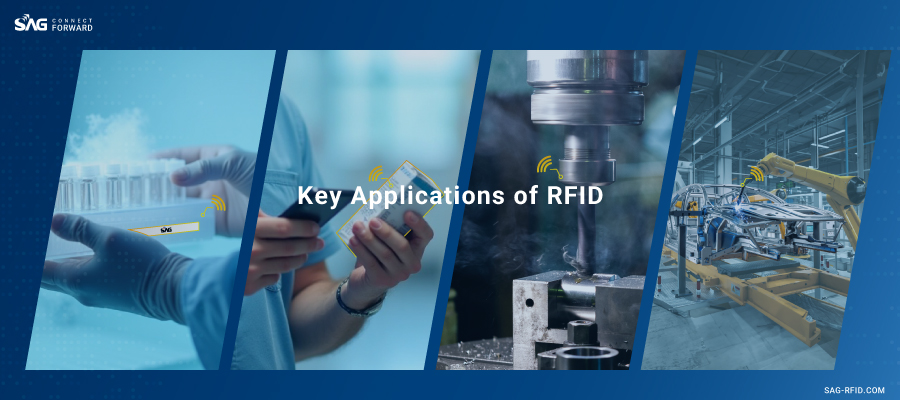
6. Key Applications of RFID system
RFID (Radio Frequency Identification) system has revolutionized various industries by enabling precise, automated tracking and data collection. By offering fast, contactless tracking of objects, RFID tags are now integral to numerous applications, ranging from healthcare to retail.
Automation and Manufacturing: Automates processes, enhances inventory control, and improves operational reliability. Through real-time monitoring and *M2M communication within the Digital Data Chain (DDC), RFID supports predictive maintenance and tooling management. For instance, alerting when a machine part needs replacement before failure.
*M2M(Machine-to-Machine) Communication: Machines exchanging data with each other, while IoT builds on M2M by connecting that machine data to cloud platforms, apps, and business processes.
Logistics: Improves supply chain visibility, automates warehouse operations, and ensures accurate shipment tracking. For example, scanning stacks of pallets at loading docks can minimize labor costs and shipping errors. With RTI tracking, RFID maximizes the utilization of reusable pallets and containers, lowering expenses while supporting sustainability.
Automotive: Ensures accurate tracking of vehicle components via production. RFID tags withstand harsh conditions, enable real-time monitoring and streamline operations such as verifying the right parts installed on the assembly line.
Retail: Improves inventory accuracy, reduces shrinkage, and enhances the shopping experience. RFID enables real-time item tracking across the supply chain. To illustrate, ensuring shelves are restocked quickly and supporting seamless omnichannel shopping.
Branding: Protects brand integrity by enabling product authentication and preventing counterfeiting. RFID tags embedded in luxury goods or apparel allow customers and retailers to verify authenticity at every stage of the supply chain.
Access Control: Strengthening security by granting or restricting access through RFID cards or badges, organizations can monitor entry and exit.
Others: Beyond the industries mentioned, RFID had also been found in applications like agriculture, libraries, and event management, e.g. managing livestock, streamlining book checkouts, or monitoring attendee flow.
As the backbone of smarter identification and tracking, RFID connects comprehensive data into a continuous data flow across the supply chain. By turning physical movements into digital insights, RFID not only delivers visibility and efficiency but also lays the groundwork for IoT and AIoT ecosystems to connect forward. This article is just the beginning: in our upcoming pieces, we’ll dive deeper into what is an RFID hard tag and how to choose the right solution for your needs.
Explore our blog to stay ahead and unlock the full potential of RFID!
- Healthcare and Pharmaceutical:
Explore our blog to stay ahead and unlock the full potential of RFID!