

Choose Insights
Choose Year
1. Case Background
Importance of Regular Maintenance of PPE for People Working at Heigh
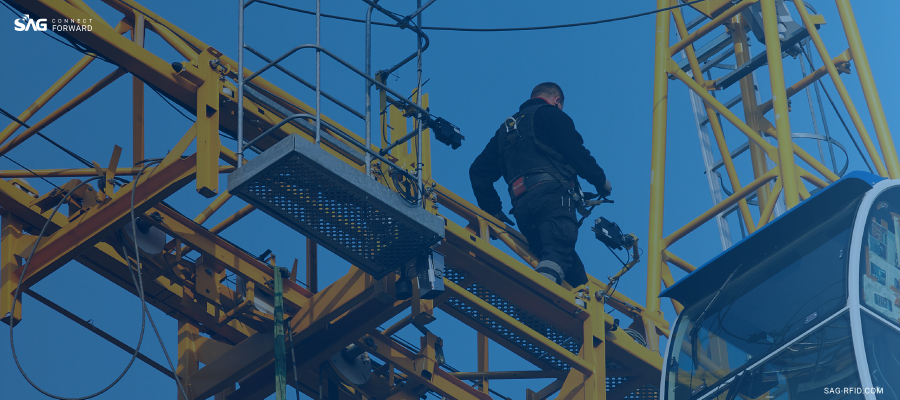
When working at height, the reliability of Personal Protective Equipment (PPE) is not a matter of convenience but of survival. In these environments, there is no margin for failure; equipment either performs as intended, or the consequences can be severe.
Even in extreme climbs, safety systems remain critical. While Alex Honnold’s 2026 ascent of Taipei 101 was a free solo climb without ropes or a harness, the broader operation still relied on extensive safety protocols for training and support personnel. In industrial settings such as telecommunications, utilities, and infrastructure maintenance, such risks are part of daily operations. Workers operating hundreds of feet above ground rely daily on PPE such as full-body harnesses, lanyards, and carabiners as their final line of defence.
However, PPE performance can degrade over time due to repeated use, UV exposure, moisture, contamination, and improper storage, often without visible warning signs. Equipment that appears functional may already be compromised. Regular inspection, maintenance, and traceable asset management are therefore essential not only for compliance, but for protecting lives and maintaining a zero-compromise safety culture.
Even in extreme climbs, safety systems remain critical. While Alex Honnold’s 2026 ascent of Taipei 101 was a free solo climb without ropes or a harness, the broader operation still relied on extensive safety protocols for training and support personnel. In industrial settings such as telecommunications, utilities, and infrastructure maintenance, such risks are part of daily operations. Workers operating hundreds of feet above ground rely daily on PPE such as full-body harnesses, lanyards, and carabiners as their final line of defence.
However, PPE performance can degrade over time due to repeated use, UV exposure, moisture, contamination, and improper storage, often without visible warning signs. Equipment that appears functional may already be compromised. Regular inspection, maintenance, and traceable asset management are therefore essential not only for compliance, but for protecting lives and maintaining a zero-compromise safety culture.
2. Manual PPE Management Challenges
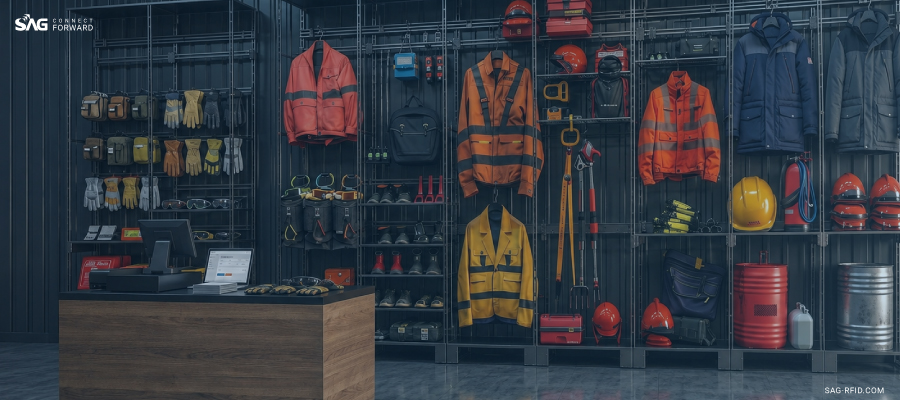
Managing PPE is a critical responsibility for organizations working at height. When the job relies on manual documentation, it often suffers from limited visibility, creating several critical failure points that can lead to user safety issues.
1.Large Inventory Management Problem
When there are hundreds of items, PPE managers struggle to monitor large inventories. They might have difficulty verifying which items were inspected. Inconsistent records increase the risk of workers unknowingly using gears that are suspected of being expired.
2.Data Entry and Inspection Gap
Relying on manual data entry often leads to significant information gaps. When inspection details are recorded by hand, human error or delayed updates can result in incomplete records. Additionally, managing and tracking multiple items can become complex, leading to damaged or poorly maintained equipment going unnoticed. This not only endangers worker safety but also risks non-compliance with regulatory standards.
3. Authentication Weakness
When manual systems offer no trusted way to verify against manufacturer databases, counterfeit gear can enter circulation. This lack of traceability not only exposes workers to physical harm but also leaves organizations vulnerable to follow safety standards and fall protection requirements.
1.Large Inventory Management Problem
When there are hundreds of items, PPE managers struggle to monitor large inventories. They might have difficulty verifying which items were inspected. Inconsistent records increase the risk of workers unknowingly using gears that are suspected of being expired.
2.Data Entry and Inspection Gap
Relying on manual data entry often leads to significant information gaps. When inspection details are recorded by hand, human error or delayed updates can result in incomplete records. Additionally, managing and tracking multiple items can become complex, leading to damaged or poorly maintained equipment going unnoticed. This not only endangers worker safety but also risks non-compliance with regulatory standards.
3. Authentication Weakness
When manual systems offer no trusted way to verify against manufacturer databases, counterfeit gear can enter circulation. This lack of traceability not only exposes workers to physical harm but also leaves organizations vulnerable to follow safety standards and fall protection requirements.
3.Benefits of Smart Management by Using RFID/NFC

Transitioning to digital PPE management systems is not just a matter of convenience; it is a critical step toward ensuring safety, regulatory compliance, and authenticity in high-risk environments so that every worker is protected by properly maintained, verified equipment. By integrating RFID/NFC technology, organizations can replace manual, error-prone tracking with real-time data capture, creating a seamless management system with the following benefits:
1.Enhanced Visibility
PPE managers can establish a connected safety ecosystem. It helps identify and flag items for inspection based on their use history and environment, effectively preventing hidden failures.
2.Precision and Data Accuracy
RFID systems improve data accuracy, ensuring that maintenance records, inspections, and inventory are always up to date. Meanwhile, workers can quickly scan to access an item’s maintenance history and safety status, confirming safety before starting high-risk tasks.
3.Reduced Counterfeit Risks
By using unique digital IDs, RFID provides a smart authentication method, protecting the organization from counterfeit gear that could expose workers to physical harm.
1.Enhanced Visibility
PPE managers can establish a connected safety ecosystem. It helps identify and flag items for inspection based on their use history and environment, effectively preventing hidden failures.
2.Precision and Data Accuracy
RFID systems improve data accuracy, ensuring that maintenance records, inspections, and inventory are always up to date. Meanwhile, workers can quickly scan to access an item’s maintenance history and safety status, confirming safety before starting high-risk tasks.
3.Reduced Counterfeit Risks
By using unique digital IDs, RFID provides a smart authentication method, protecting the organization from counterfeit gear that could expose workers to physical harm.
4.Physical Tagging Constraints

PPE management using RFID or NFC technology as data carriers streamlines tracking, ensures accurate records, and improves accountability. However, tagging various PPE items is challenging. Some items are considered impossible to tag due to their shapes, materials, and harsh usage conditions.
1.Limited Flat Tagging Space
I-beam spine carabiners have very limited flat surfaces, so tags must be miniaturized and embeddable without compromising integrity.
2.No Tagging Space
Round steel bar carabiners and harnesses have virtually no tagging space. Equipment managers often use external tabs that can break during use.
3.Metal Interference
These items endure harsh impacts and environmental stress, requiring RFID tags or labels to be highly durable and resilient.
4.Mechanical Stress and Harsh Environment
Harnesses endure repeated impacts, bending, and abrasion. Therefore, RFID labels must withstand UV radiation and mechanical impacts and not peel off.
These product-specific challenges require the development of miniaturized or customized RFID tagging solutions to ensure reliable item-level tracking.
1.Limited Flat Tagging Space
I-beam spine carabiners have very limited flat surfaces, so tags must be miniaturized and embeddable without compromising integrity.
2.No Tagging Space
Round steel bar carabiners and harnesses have virtually no tagging space. Equipment managers often use external tabs that can break during use.
3.Metal Interference
These items endure harsh impacts and environmental stress, requiring RFID tags or labels to be highly durable and resilient.
4.Mechanical Stress and Harsh Environment
Harnesses endure repeated impacts, bending, and abrasion. Therefore, RFID labels must withstand UV radiation and mechanical impacts and not peel off.
These product-specific challenges require the development of miniaturized or customized RFID tagging solutions to ensure reliable item-level tracking.
5 Product Solutions
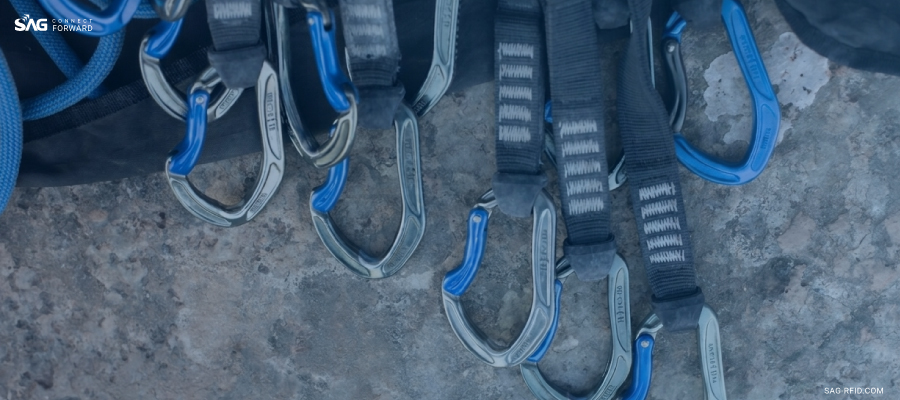
SAG, acting as the RFID Challenge Enabler, offers a range of RFID/NFC tags and labels designed to meet specific physical limitations and environmental conditions in the field.
For Limited Tagging Space
● CoreX Series (Embeddable Solutions)integrates seamlessly into space-constrained products. These tags attach securely with adhesive or epoxy, making them versatile for various PPE forms. Using our embeddable tags on items like I-beam carabiners streamlines inventory tracking and inspections. They enable quick identification and status checks. Providing real-time data access and easy attachment, our tags ensure equipment is accurately accounted for and maintained to safety standards.
For No Tagging Space
● Cable Tie Tag provides a secure, tamper-proof way to tag difficult items without flat surfaces. It fits snugly around round-bar carabiners, stretches to fit slightly larger diameters, and resists physical impacts, keeping safety gear properly identified and easy to track.
● Iron-on Garment Label is a versatile, reliable solution for identifying and tracking fabric-based PPE like full-body harnesses. Designed for easy application with a household iron or heat press, these labels adhere seamlessly to various textiles, ensuring durability. Whether for quality control, inventory management, or safety compliance, these labels keep products organized and traceable.
For Metal Interference and Mechanical Impact
● Metal Label with ShieldX technology is enhanced to withstand metal interference and physical impacts. It includes extra protection for the chip and a durable top layer. The label size can be die-cut to fit most items, ensuring long-lasting performance in extreme conditions. This makes it ideal for anchors, fall arresters, and other rugged components.
For Limited Tagging Space
● CoreX Series (Embeddable Solutions)integrates seamlessly into space-constrained products. These tags attach securely with adhesive or epoxy, making them versatile for various PPE forms. Using our embeddable tags on items like I-beam carabiners streamlines inventory tracking and inspections. They enable quick identification and status checks. Providing real-time data access and easy attachment, our tags ensure equipment is accurately accounted for and maintained to safety standards.
For No Tagging Space
● Cable Tie Tag provides a secure, tamper-proof way to tag difficult items without flat surfaces. It fits snugly around round-bar carabiners, stretches to fit slightly larger diameters, and resists physical impacts, keeping safety gear properly identified and easy to track.
● Iron-on Garment Label is a versatile, reliable solution for identifying and tracking fabric-based PPE like full-body harnesses. Designed for easy application with a household iron or heat press, these labels adhere seamlessly to various textiles, ensuring durability. Whether for quality control, inventory management, or safety compliance, these labels keep products organized and traceable.
For Metal Interference and Mechanical Impact
● Metal Label with ShieldX technology is enhanced to withstand metal interference and physical impacts. It includes extra protection for the chip and a durable top layer. The label size can be die-cut to fit most items, ensuring long-lasting performance in extreme conditions. This makes it ideal for anchors, fall arresters, and other rugged components.
Not Sure Where to Start?
If your application involves challenges such as metal surfaces, liquid interference, harsh environments, or complex workflows, a feasibility assessment is highly recommended. SAG provides application-driven RFID solutions, from tag design to system integration—ensuring reliable performance in real-world conditions.
Choosing the right RFID tag is a balance of physics, environment, and data needs. To explore the specific formats we’ve discussed, check out our deep dives:
➔ How to choose the right RFID tags?
➔ What is RFID Hard Tag?
➔ What is RFID Label?
Ready to move forward?
➔ Self-Service: Use our Product Selector to filter tags by frequency, material, and application.
➔ Expert Consultation: Contact SAG for a feasibility check tailored to your specific environment.
➔ Back to Basics: For a refresher on the entire ecosystem, visit our guide: What is RFID?
6 Looking Ahead
As the RFID Tagging Challenge Enabler, we continue to pioneer innovative RFID solutions, empowering organizations to navigate every tagging possibility once deemed impossible. We are dedicated to Ambient IoT, linking physical assets to the digital world through RFID/NFC smart tags for real-time visibility and traceability. Equipped with advanced manufacturing capabilities and deep expertise in customization, we overcome challenges such as limited tagging space, metal interference, and harsh environments. When lives depend on PPE, visibility is safety. SAG works alongside your team to build smarter, more comprehensive PPE management by digitizing inspections, improving traceability, reducing human error, and helping ensure every critical asset is accounted for before it is needed most.
Together, we are building a smarter, safer, and more connected future.
Together, we are building a smarter, safer, and more connected future.